

Minoxidil – Everything You Need to Know About Hair Growth
Millions of people worldwide have used Minoxidil to treat hair loss. Originally developed as a blood pressure medication, it was discovered to promote hair growth as a side effect. Minoxidil is now sold over the counter as a topical solution or foam under several brand names such as Rogaine and Regaine.
This comprehensive guide will cover how Minoxidil works, dosing, side effects, beard growth, hairline regrowth, absorption, best formulations, and answer the most frequently searched questions about Minoxidil.
Can Minoxidil Regrow a Hairline?
Many people want to know whether Minoxidil can regrow a receding hairline. Minoxidil is most effective when applied to the crown and top of the scalp. However, some individuals may also experience improvement in the frontal hairline, with results more variable.
Where hair follicles are still present but very small (miniaturised), Minoxidil is more likely to help stimulate thicker hair growth. For hairlines, this usually means your existing hairs will look fuller and denser, rather than creating new follicles that were previously absent.
How Minoxidil Supports Hairline Growth
Many people want to know whether Minoxidil can regrow a receding hairline. Minoxidil is most effective when applied to the crown and top of the scalp. However, some individuals may also experience improvement in the frontal hairline, with results more variable.
Where hair follicles are still present but very small (miniaturised), Minoxidil is more likely to help stimulate thicker hair growth. For hairlines, this usually means your existing hairs will look fuller and denser, rather than creating new follicles that were previously absent.
Key Points About Hairline Results
- Minoxidil may thicken fine hairs along a receding hairline. Still, it has a limited ability to regrow hair in completely bald areas.
- Consistency is essential; early changes are usually noticed after 4–6 months of daily use.
- Individuals who start treatment early in the hair-loss process tend to see better cosmetic improvement.
Practical Tips for Hairline Application
- Apply Minoxidil evenly once a day using fingertips or a dropper.
- Focus on thinning areas rather than fully bald skin.
- Do not overapply — higher doses do not increase effectiveness.
- For improved outcomes, Minoxidil is often combined with Finasteride or PRP.
How Minoxidil Works
The mechanism of action of Minoxidil has not yet been fully elucidated; however, a variety of mechanisms that enhance the follicular environment, allowing weakened follicles to continue producing hair for an extended period, have been identified through both clinical trials and laboratory experiments. One proposed mechanism is that Minoxidil acts as a vasodilator, widening blood vessels and improving the environment around the hair follicle, supporting continued hair growth.
Established Mechanisms of Action
- Prolongation of the anagen phase: Hair follicles remain in active growth for longer
- Follicle enlargement: Dormant or miniaturised follicles increase in diameter, producing fuller strands
- Potassium channel activation: Improves cellular activity and follicle function
Formulations and Strengths
- Available in 2% and 5% strengths
- 5% Minoxidil is available as a solution or foam
- The 5% formulation is generally more effective in men but may cause more scalp irritation.
- Women may use 2% or 5% Minoxidil formulations, depending on the product type and clinical guidance.
How to Maximise Effectiveness
- Apply Minoxidil once daily.
- Ensure the scalp is dry before application.
- Avoid washing hair for at least four hours after use.
- Maintain a gentle scalp-care routine to minimise irritation.
What Minoxidil Does
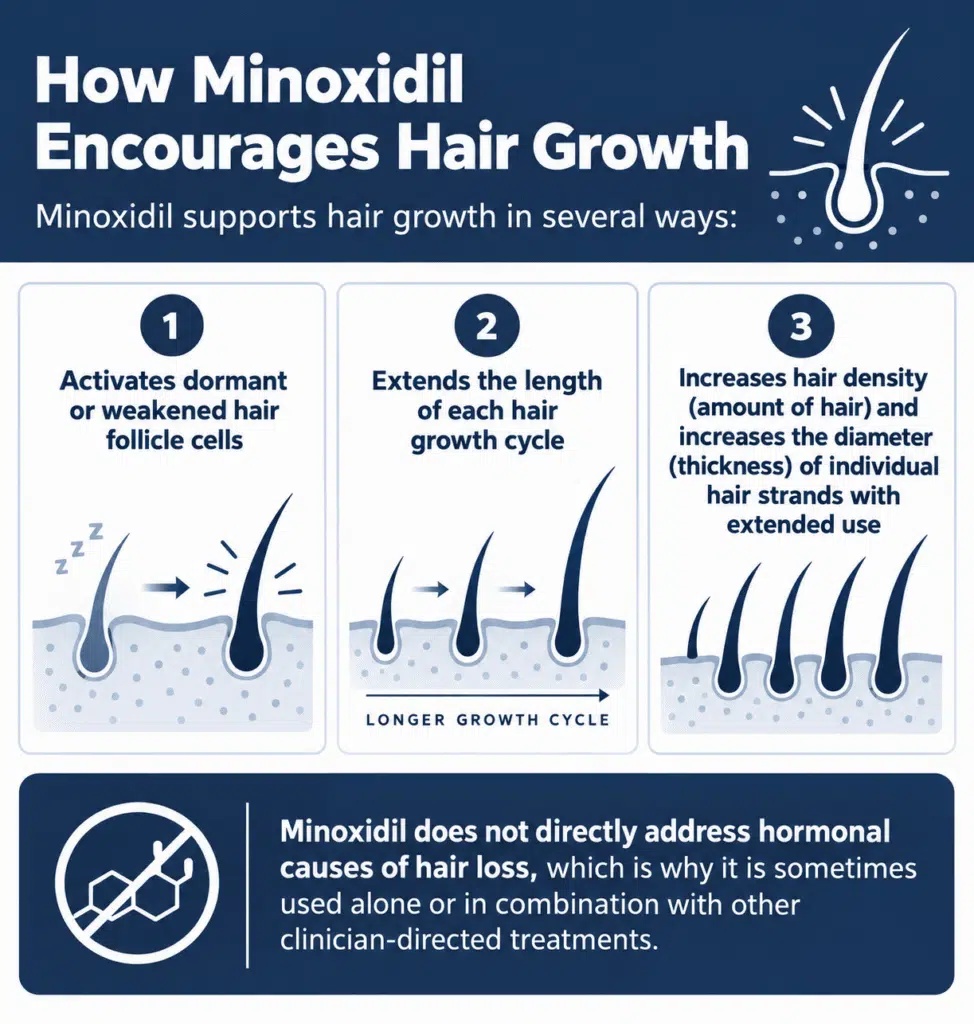
Minoxidil encourages hair growth in several ways:
- Activates dormant or weakened hair follicle cells
- Extends the length of each hair growth cycle
- Increases hair density (amount of hair) and increases the diameter (thickness) of individual hair strands with extended use
Minoxidil does not directly address hormonal causes of hair loss, which is why it is sometimes used alone or in combination with other clinician-directed treatments.
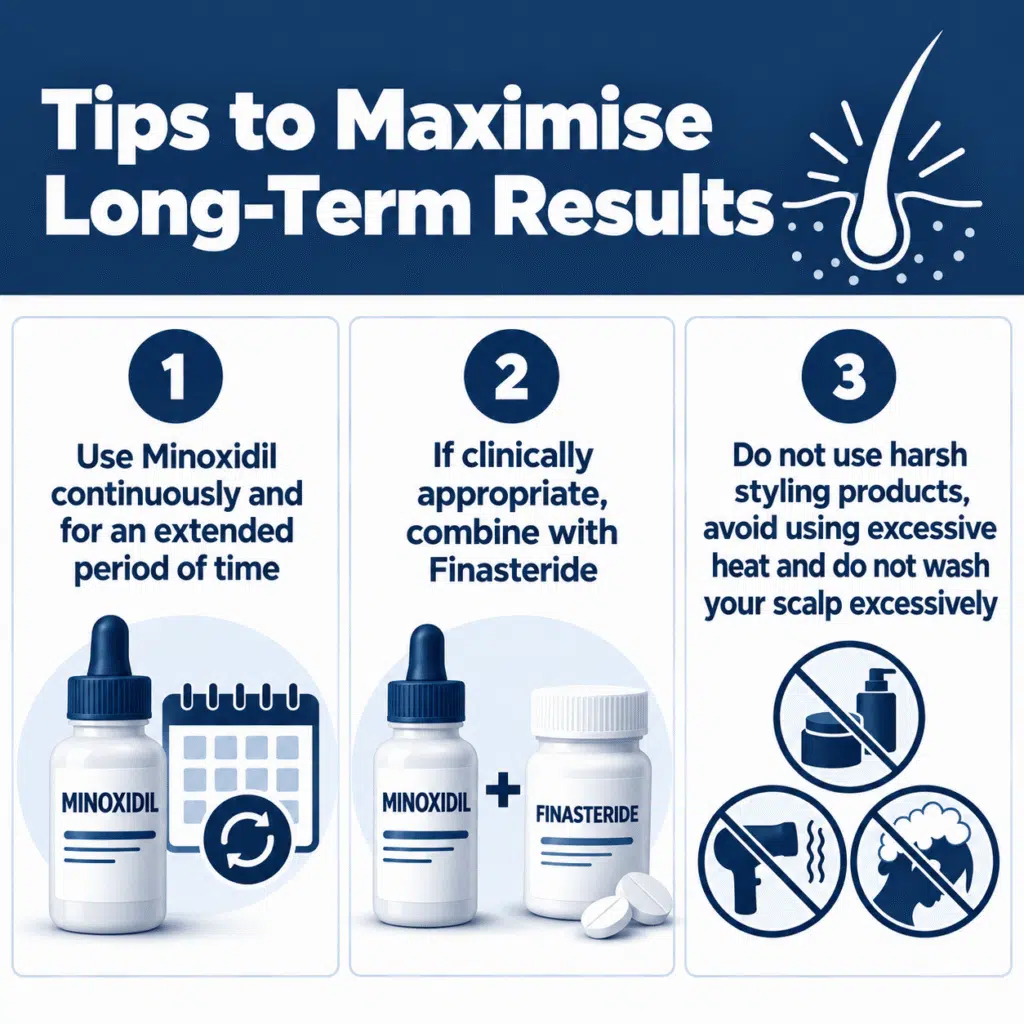
Tips to Maximise Long-Term Results
- Use Minoxidil continuously and for an extended period of time
- If clinically appropriate, combine with Finasteride
- Do not use harsh styling products, avoid using excessive heat and do not wash your scalp excessively
Will Minoxidil Cause Hair Loss?
A common concern is whether Minoxidil causes hair loss. Users may experience early shedding, known as the “shedding phase.”
Shedding phase details:
- Begins 2–8 weeks after starting treatment
- Often lasts a short period while hair follicles transition into a new growth cycle.
- Indicates follicles are transitioning from weaker hairs to stronger, thicker hair
When to seek help:
- If shedding continues beyond 2 months, consult a dermatologist or hair doctor
- If shedding persists or is concerning, consult a dermatologist or healthcare provider.
How Much Minoxidil to Use?
- Men: 1 mL of 5% solution once daily or half a capful of 5% foam
- Women: 1 mL of 2% solution once daily, or an equivalent 5% foam
Application tips:
- Apply to a dry scalp
- Use the dropper or foam cap to ensure even coverage
- Do not exceed the recommended dosage; more does not speed results
Related questions answered inline:
- How much Minoxidil is in Rogaine? 5% for men, 2% for women
- How much Minoxidil per day? One applications daily
- How much Minoxidil should I use? 1 mL per application
- How much Minoxidil to apply? Use a dropper or foam to cover the thinning area.
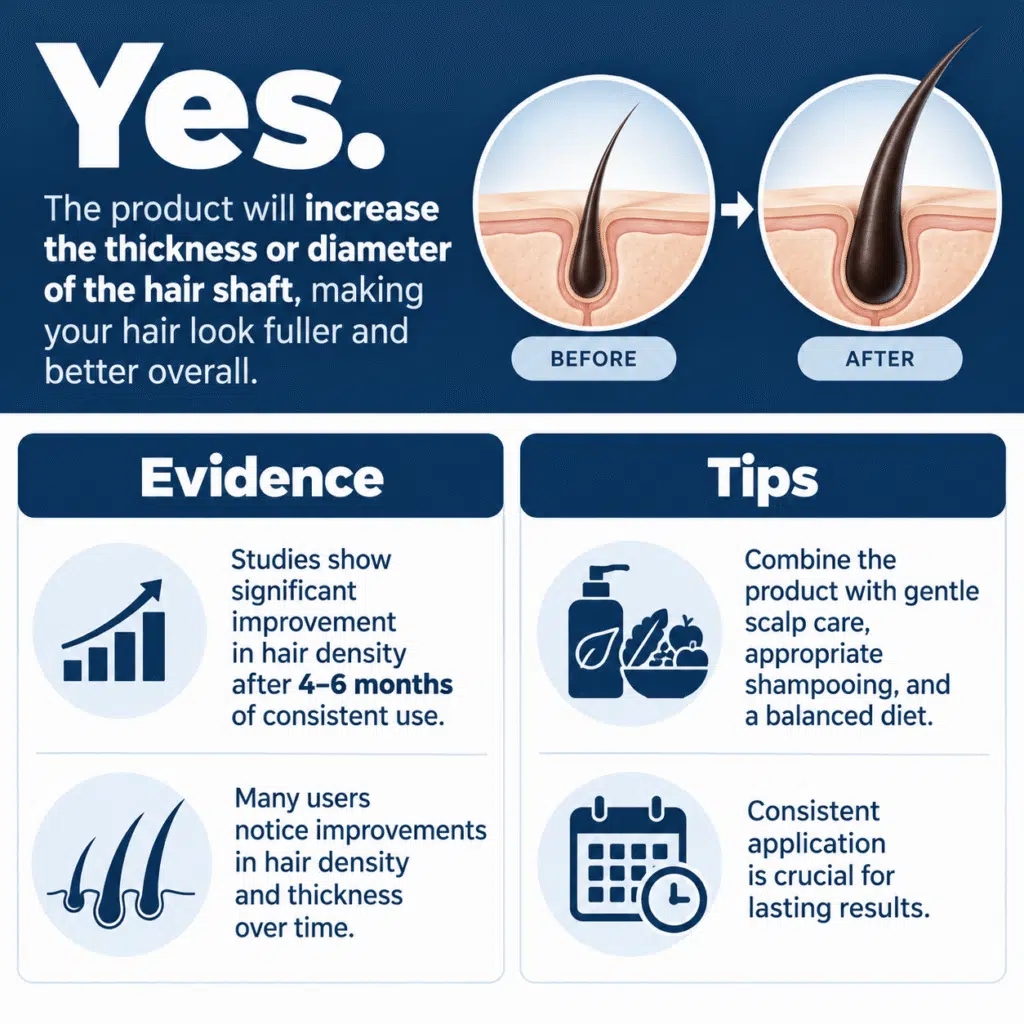
Will Minoxidil Make Hair Thicker?
Yes. The product will increase the thickness or diameter of the hair shaft, making your hair look fuller and better overall.
Evidence:
- Studies show significant improvement in hair density after 4–6 months of consistent use.
- Many users notice improvements in hair density and thickness over time.
Tips:
- Combine the product with gentle scalp care, appropriate shampooing, and a balanced diet.
- Consistent application is crucial for lasting results.
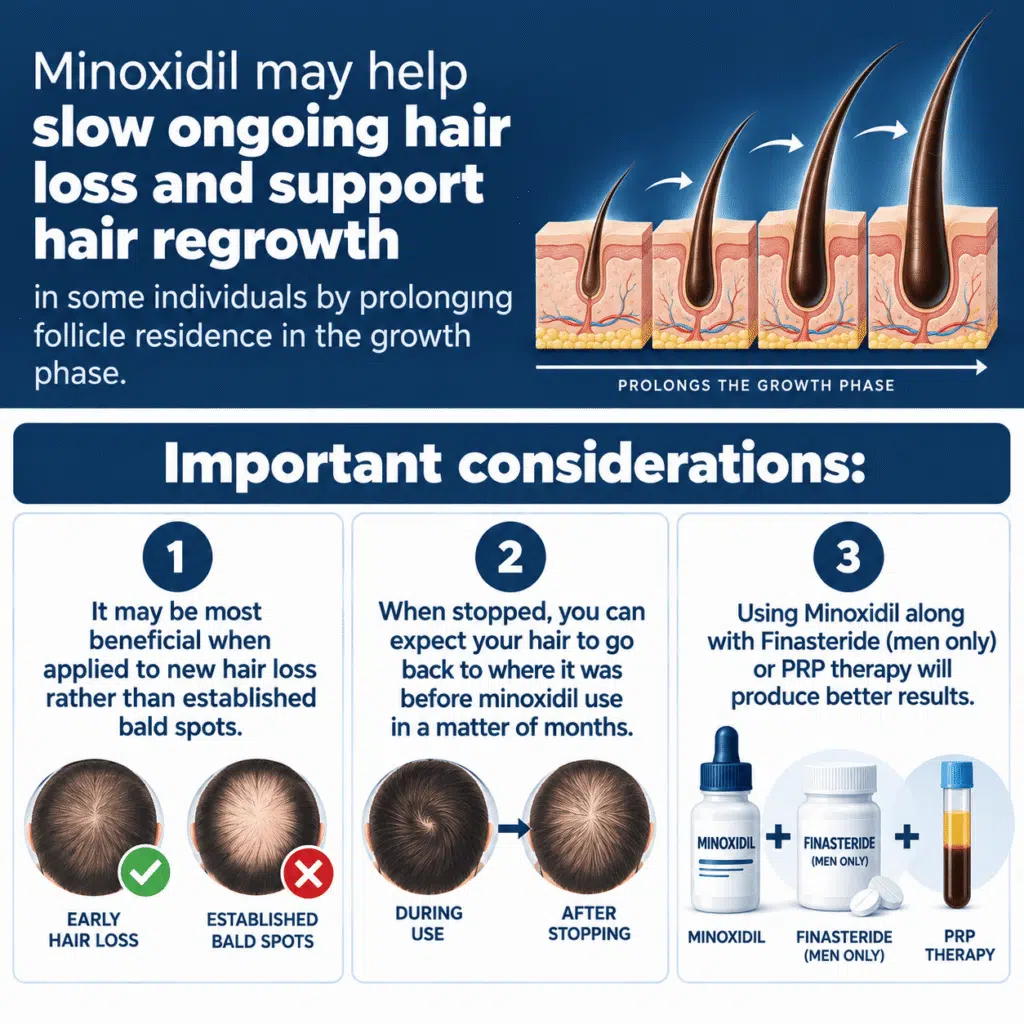
Will Minoxidil Stop Hair Loss?
Minoxidil may help slow ongoing hair loss and support hair regrowth in some individuals by prolonging follicle residence in the growth phase.
Important considerations:
- It may be most beneficial when applied to new hair loss rather than established bald spots
- When stopped, you can expect your hair to go back to where it was before minoxidil use in a matter of months
- Using Minoxidil along with Finasteride (men only) or PRP therapy will produce better results
Can Minoxidil Cause Dandruff?
Some patients have reported that using this product can cause scalp dryness, flaking, and irritation.
Management tips:
- Switch to foam versions or lower-alcohol solutions, and use an anti-dandruff shampoo designed for sensitive scalps.
- Consider using a gentle anti-dandruff shampoo or scalp-friendly moisturising products if dryness occurs.
Which Minoxidil Is Best?
Many factors can influence which Minoxidil is best suited for your use.
For scalp hair:
- Men: the 5% minoxidil solution or foam is recommended.
- Women: Women should be given the 2% solution as standard. However, in some cases, the 5% solution may be prescribed.
For beard growth:
- Minoxidil is sometimes used off-label to support beard growth, though clinical evidence is less robust than for scalp hair.
For regrowth and a sensitive scalp:
- If your scalp is sensitive, you may prefer the foam, as it is generally gentler than the solution.
- When applying Minoxidil to large areas, the solution may be easier to use than the foam.
Factors to consider:
- Skin sensitivity
- Area size
- Ease of application
- Product source
Will Minoxidil Grow a Beard?
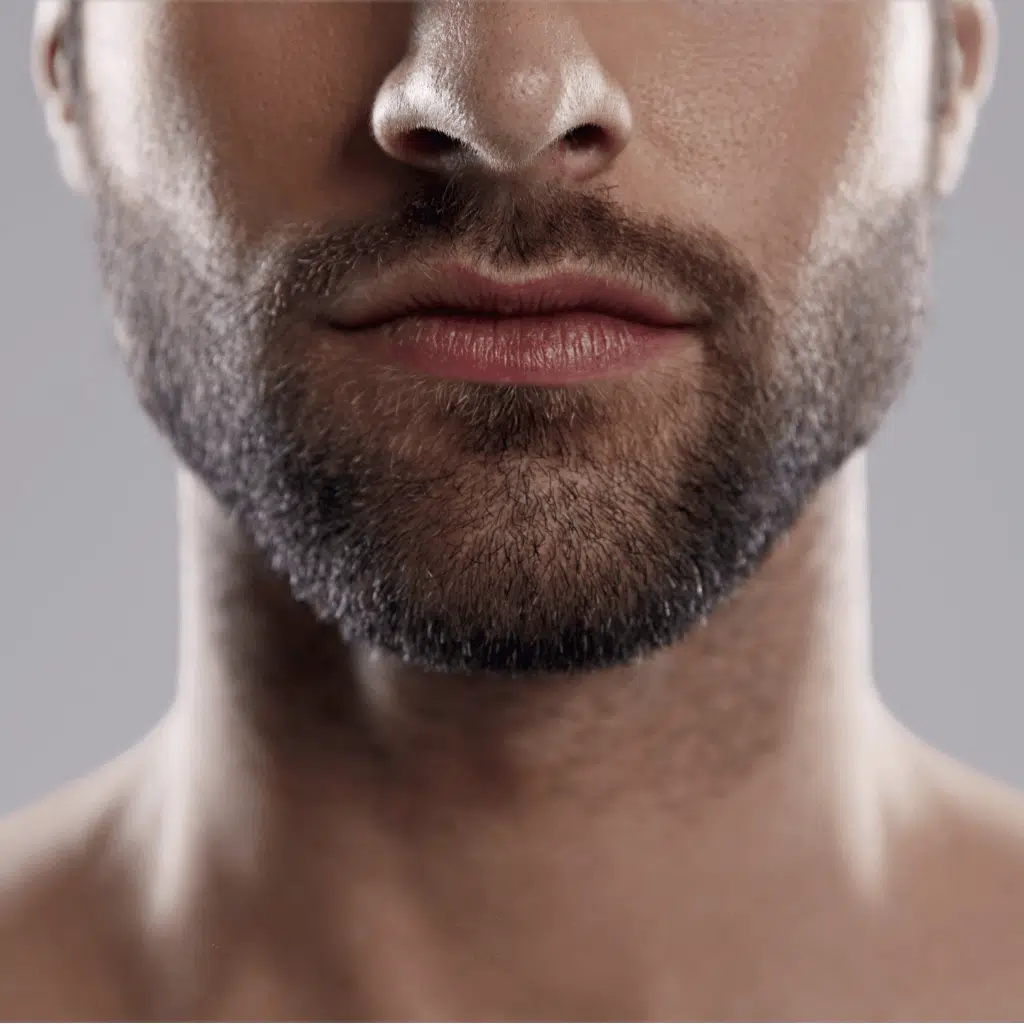
Yes, Minoxidil can help stimulate beard growth by activating dormant or weak hair follicles in the facial area. While Minoxidil is not initially designed for beard growth, it is commonly used off-label for this purpose. It has shown promising results for many individuals with patchy or thin facial hair.
Minoxidil works by improving blood flow to hair follicles, prolonging the growth (anagen) phase, and increasing follicle size. When applied consistently to the beard area, this can encourage the development of thicker, more visible facial hair over time.
What Results Can You Expect?
- Early growth may appear as delicate, light, or patchy hairs within the first few weeks
- These hairs often become darker and thicker over time
- Most users notice more defined beard coverage after 3–6 months of consistent use
- Results vary depending on genetics, age, and consistency of application
Patience and regular use are essential, as beard follicles typically respond more slowly than scalp hair.
How to Apply Minoxidil for Beard Growth
To get the best results possible when using Minoxidil for beard growth, please follow these application guidelines:
- Apply a small amount of Minoxidil to clean, dry skin, typically once or twice daily, as directed by the product instructions.
- Spread the liquid evenly over your beard with your fingertips or a dropper.
- Wait until the Minoxidil is wholly absorbed into the skin before applying any moisturiser or sunscreen.
- Wash your hands thoroughly after each application.
- Using a mild facial cleanser and moisturiser may help to minimise dryness or irritation.
Related Questions
Which Minoxidil is best for beard growth?
The 5% Minoxidil solution is most often recommended for beard growth because it is more effective than the 2% solution.

How much Minoxidil should I use for my beard?
Use 1 milliliter (mL) of Minoxidil per application, once daily, and apply it only to the area(s) where you want to grow your beard.
Are Minoxidil beard gains permanent?
Some individuals may retain a portion of newly formed beard hairs as they mature. However, long-term outcomes vary, and research on beard growth is limited. If you stop using it, you will likely notice your beard thinning and/or losing density over time.
Tips to Maximise Beard Growth Results
- Apply Minoxidil consistently every day
- Avoid overapplying, as this does not increase effectiveness
- Maintain good skin care to reduce dryness or flaking
- Support growth with proper nutrition and healthy lifestyle habits
When used correctly and consistently, Minoxidil can be an effective option for individuals looking to improve beard density, fill in patchy areas, and promote fuller facial hair growth over time.
Can Minoxidil Cause High Blood Pressure, Anxiety, or Depression?
Minoxidil is most commonly used as a topical treatment, and when applied to the scalp, systemic side effects are uncommon. The vast majority of users tolerate Minoxidil well, mainly when used as directed.
High Blood Pressure and Cardiovascular Effects
Minoxidil was initially developed as an oral medication for high blood pressure, which is why some users worry about cardiovascular side effects. However, this concern primarily applies to oral Minoxidil, not topical formulations.
- Topical Minoxidil has minimal systemic absorption
- Changes in blood pressure are rare when applied to the scalp
- Cardiovascular side effects are more relevant at higher oral doses, which are prescribed under medical supervision
A healthcare professional should constantly monitor individuals with known heart conditions or those using oral Minoxidil.
Anxiety and Mood Changes
There is no strong clinical evidence linking topical Minoxidil directly to anxiety or depression. That said, some users may experience indirect effects related to treatment:
- Temporary scalp irritation or itching may cause discomfort
- Initial shedding can create a short-term cosmetic concern
- Hair loss itself can affect confidence and emotional well-being
These factors may contribute to perceived mood changes rather than a direct pharmacological effect of Minoxidil.
Other Common and Mild Side Effects
Most side effects associated with topical Minoxidil are local and temporary, including:
- Scalp dryness or flaking
- Mild itching or redness
- Increased shedding during the early treatment phase
These effects often improve as the scalp adjusts or when switching to a foam formulation that contains fewer irritating solvents.
When to Speak to a Doctor
Consult a healthcare provider if you:
- Have pre-existing cardiovascular conditions
- Are you considering oral Minoxidil
- Experience persistent irritation or unusual symptoms
- Are unsure which formulation or strength is appropriate
When used correctly and consistently, Minoxidil remains a safe and well-established hair-loss treatment for most individuals.
Will Minoxidil Regrow Eyebrows?
Minoxidil has been used off-label in some cases to support eyebrow hair regrowth, particularly when thinning has occurred due to over-plucking, ageing, or temporary hair loss. While Minoxidil is not officially approved for eyebrow use, there are documented reports and clinical observations of improved eyebrow density with careful application.
Minoxidil may encourage eyebrow follicles to re-enter the growth (anagen) phase, helping strengthen existing hairs and stimulate new growth in viable follicles.
What Results Can You Expect?
- Early regrowth may appear as fine or light hairs
- With continued use, these hairs may thicken and darken over time
- Noticeable changes are typically seen after 8–12 weeks of consistent application
- Results vary depending on follicle health and the underlying cause of eyebrow thinning
Minoxidil is unlikely to regrow hair in areas where follicles have been permanently damaged.
How to Apply Minoxidil to Eyebrows Safely
Because the eyebrow area is sensitive, careful use is essential:
- Use a low-concentration Minoxidil solution
- Apply a minimal amount using a cotton swab or clean fingertip
- Avoid contact with the eyes at all times
- Apply once daily unless advised otherwise by a healthcare professional
Allow the product to fully absorb before applying skincare or makeup.
Is Eyebrow Regrowth Permanent?
Some individuals may retain some improvement after stopping Minoxidil, although continued use may be required to maintain results. However, as with other hair-growth areas, continued use may be required to maintain results, especially if the underlying cause of thinning persists.
When to Seek Medical Advice
Consult a healthcare provider if:
- Eyebrow hair loss is sudden or unexplained
- You experience irritation, redness, or swelling
- You are unsure whether Minoxidil is appropriate for eyebrow use
When used cautiously and consistently, Minoxidil may offer a potential option for eyebrow regrowth in selected individuals, provided application is careful and expectations remain realistic.
How Long Does Minoxidil Take to Absorb?
Minoxidil should be allowed to dry fully after application, and it is generally recommended to avoid washing the treated area for about four hours to allow adequate absorption.
You should avoid washing your hair or swimming for at least 4 hours after applying Minoxidil.
Where to Get Minoxidil Safely
Topical Minoxidil is sometimes available over the counter, while oral Minoxidil and compounded combinations require medical supervision. A qualified provider ensures:
- Proper assessment of hair loss
- Guidance on formulation and dosage
- Monitoring for side effects
- Authentic and regulated products
Medical Hair Restoration provides all of the above.
Minoxidil Combination Options at Medical Hair Restoration
At Medical Hair Restoration (MHR), Minoxidil is available in a range of carefully formulated topical and oral combinations that allow treatment plans to be tailored to individual needs, hair-loss patterns, and tolerance levels. These options include Minoxidil combined with supportive ingredients such as biotin, as well as prescription-based combinations with agents like Finasteride, Dutasteride, Spironolactone, or Tretinoin, which may be selected by a clinician where appropriate. Both topical and oral formulations are offered, including foams, sprays, and compounded capsules for men and women, ensuring flexibility in application and dosing. All combinations are dispensed following medical assessment to ensure suitability, safety, and consistency with evidence-based care.
Commonly Prescribed Minoxidil Options at MHR
Oral formulations
- Biotin 10MG Minoxidil 1.5MG
- Biotin 10MG Minoxidil 2.5MG
- Biotin 10MG Minoxidil 5MG
- Dutasteride 0.5MG Minoxidil 2.5MG
- Minoxidil 2.5MG and Spironolactone 25MG
- Minoxidil 5MG and Spironolactone 25MG capsules for women
- Minoxidil 2.5MG Finasteride 1MG
- Minoxidil 5MG Dutasteride 0.5MG
- Minoxidil 5MG Finasteride 1MG
Topical formulations
- Minoxidil 5% and Finasteride 0.25% Combo 50ML
- Minoxidil 5% and Tretinoin 0.01% Combo 50ML
- Minoxidil 5% Topical Foam 75ML
- Minoxidil 5% Topical Spray 50ML
In addition to medication options, Medical Hair Restoration also offers an electric red-light massage comb that can be used alongside Minoxidil as part of a broader hair-care routine. Devices of this nature are commonly used to support scalp comfort and encourage consistent application habits. The comb is intended for adjunctive use and does not replace prescribed treatment.
Accessing Minoxidil in South Africa
If Minoxidil is suitable for you, the next step is to obtain it from a legitimate provider such as Medical Hair Restoration.
-
Start an online consultation here.
-
Request a prescription to confirm suitability
-
Ensure treatment is evidence-based, genuine, and safe
